Garage floor concrete
A new garage floor pairs naturally with front walkway work - finish the whole property approach in one mobilization.
Learn more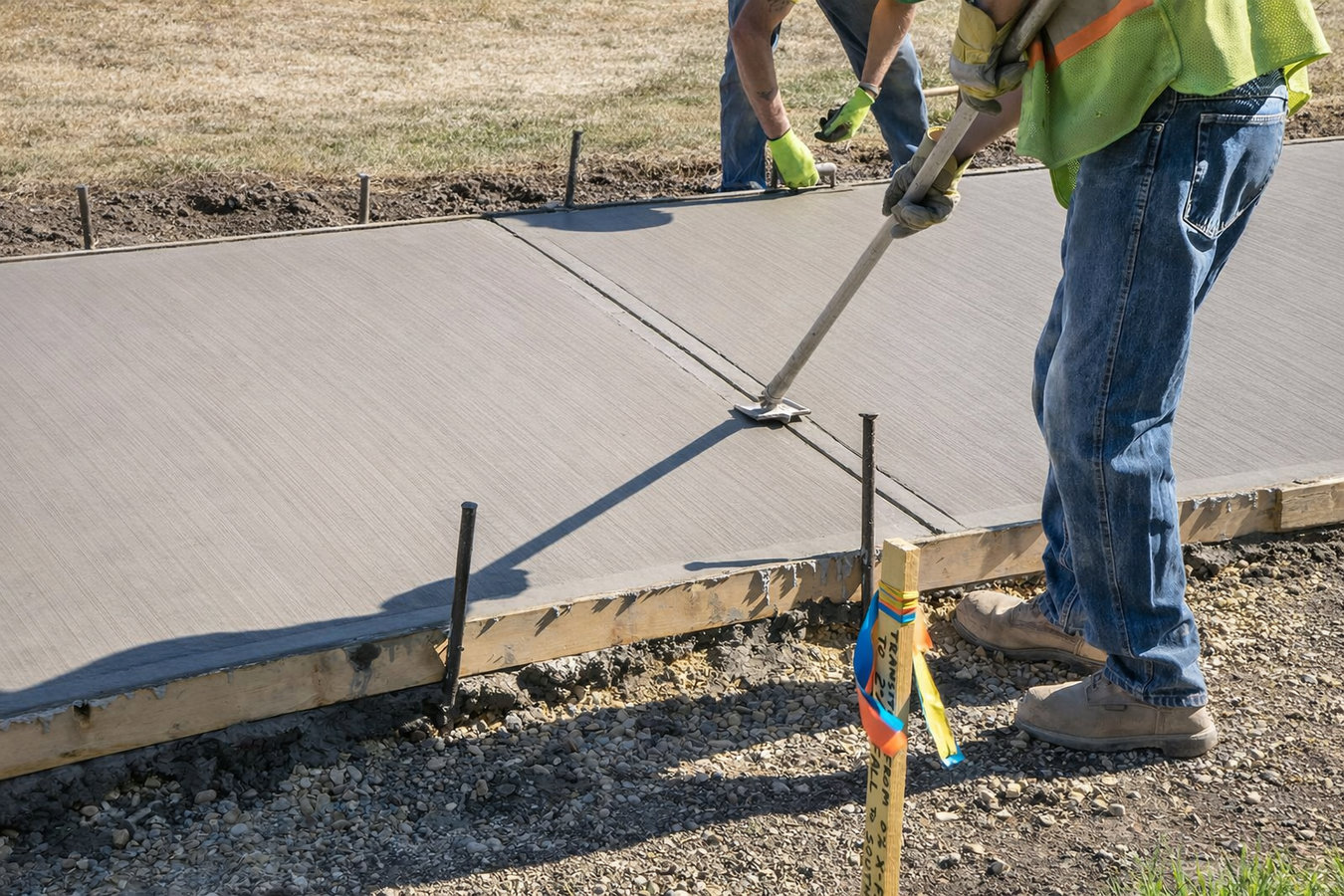
Cracked, heaving, or too narrow to walk two people side by side? We replace or build your concrete walkway from the ground up - with the permit, the base prep, and the cleanup included.
Concrete sidewalk building in Mission Viejo means removing whatever is there now, compacting and grading the ground, setting forms, and pouring a slab typically four inches thick - most residential walkway projects wrap up in one to three days, with a 24-to-48-hour wait before foot traffic.
Many homeowners in Mission Viejo are dealing with front paths that were poured in the 1970s or 1980s - old enough that tree roots have had decades to move underneath them. A walkway that heaves or cracks repeatedly isn't a patching problem; it's a base problem. Getting the ground right before the pour is what determines whether your new sidewalk still looks good a decade from now.
If you are also replacing a driveway, a new concrete driveway can be done in the same project mobilization - it often makes the permitting and site work simpler to combine them.
If one section of your walkway sits noticeably higher or lower than the one next to it, that lip is a trip hazard. In Mission Viejo's older neighborhoods, this is often caused by tree roots pushing from below or clay soil that has swelled and settled unevenly. Once a section has heaved more than half an inch, patching rarely holds - replacement is the more cost-effective fix.
Small hairline cracks along the control joints - those evenly spaced lines - are normal. But diagonal cracks that cut across the middle of a panel, or cracks wide enough to catch a coin, mean the concrete has moved in ways it wasn't designed to. These cracks collect water, which can widen them further during the wet season.
If the top layer is peeling off in chips or the surface looks pitted and rough, the concrete is breaking down from the outside in. Years of intense Mission Viejo sun on unsealed older slabs accelerates this process. A surface in this condition is past the point where sealing alone will help.
Many homes built in Mission Viejo in the 1970s and 1980s have front walkways only two to three feet wide - awkward when two people walk side by side or when moving furniture. If guests have to walk single-file to your front door, a wider replacement is a practical upgrade that also improves how the property looks from the street.
Every sidewalk job starts with removing the existing surface and hauling away the debris. We then grade and compact the soil to create a stable, level base - and if root pressure or soft spots are present, we deal with them at this stage rather than pouring over a problem. Forms are set, control joints planned, and the concrete poured at the appropriate thickness for your path's use and location. We handle the City of Mission Viejo building permit from application through city inspection sign-off, so the project is fully documented before we close out. If you want the entry to match, a garage floor upgrade can be scoped into the same project visit.
Finish options range from a standard broom texture - slip-resistant and low-maintenance - to exposed aggregate or a stamped decorative pattern for homeowners who want more curb appeal. HOA communities in Mission Viejo often have guidelines on acceptable finishes, and we confirm those before finalizing your choice so there are no surprises after the pour.
Demo of the old slab, full base prep, and a fresh pour - the right call when the existing concrete is past patching.
Building a walkway where there was none - from bare ground to a finished, permitted concrete path.
Pouring a new section alongside the old one to create a wider path without full replacement.
Standard textured surface that is non-slip, durable, and meets most HOA finish guidelines.
Small stones revealed in the surface for a decorative, low-maintenance look with added texture.
Decorative patterns that match a stamped driveway or patio for a cohesive front-of-home design.
Mission Viejo was developed mostly between the late 1960s and the 1990s, and many of the city's front walkways are approaching 40 to 50 years old. Trees planted during that era - many in parkways and front yards throughout the city - now have root systems large enough to heave concrete panels. The clay-heavy soils common in parts of the Saddleback Valley add another layer of movement: they swell in wet winters and contract in dry summers, putting steady stress on slabs that weren't built with adequate base preparation underneath. We see this combination regularly on jobs in neighborhoods near Laguna Hills and the surrounding South Orange County communities, where the housing stock is the same age.
HOA rules are another practical reality here. Mission Viejo has one of the higher HOA participation rates in Orange County, and many neighborhoods have specific guidelines on what a front walkway can look like - approved widths, finishes, and sometimes materials. Getting those details confirmed before work begins protects you from costly do-overs. Homeowners in nearby Rancho Santa Margarita face similar HOA requirements, and we apply the same upfront confirmation process there.
We come look at the job in person - not just give a number over the phone. We measure the area, check for root or drainage issues, and ask about your goals. You get a written quote that breaks out demolition, base prep, and the pour separately. We respond within 1 business day.
We submit the permit application to the City of Mission Viejo's Building Safety Division before work begins. This typically takes a few business days to process. You don't need to coordinate with the city - we handle it and confirm the permit is in hand before scheduling the crew.
The crew removes whatever is currently there and hauls it away. We then grade and compact the soil, address any root or drainage concerns found during the dig, and set the forms. This step - the preparation - is what your new walkway's lifespan depends on.
Concrete is poured, finished, and control joints cut. You can walk on it in 24 to 48 hours. The city inspector verifies the work, and we clean up the site - forms out, debris hauled, area rinsed - before doing a final walkthrough with you.
We handle the permit and city inspection - no pressure, no commitment until you see a written number.
(949) 998-2713We hold an active California Contractors State License Board C-8 Concrete Contractor license. That license means we have passed a state exam, carry required insurance, and you have a real accountability path if anything goes wrong. Look us up before you sign anything.
Tree root pressure and clay soil movement are the two most common reasons sidewalks fail prematurely in Mission Viejo. We look at both before recommending a solution - not just after things go wrong. That assessment shapes our base preparation approach on every job.
We pull the building permit, schedule the city inspection, and make sure the project is documented before we close out. A sidewalk with a clean permit history is a sidewalk that doesn't complicate your home sale down the road.
Mission Viejo has dozens of active HOAs with rules about what a front walkway can look like. We confirm what is allowed in your specific community before finalizing your finish choice - not after the concrete is poured.
Mission Viejo homeowners have high expectations - and they should. We show up on time, handle the paperwork, and build sidewalks that hold up to the soil conditions and UV exposure this city actually has.
Technical guidance on concrete construction and curing is available from the Portland Cement Association. Permit requirements for Mission Viejo are handled through the City of Mission Viejo Building Safety Division.
A new garage floor pairs naturally with front walkway work - finish the whole property approach in one mobilization.
Learn moreReplace an aging driveway alongside your new walkway for consistent curb appeal and a single permit process.
Learn moreWe handle permits, base prep, and cleanup - call now before the project calendar fills up for the season.