
Slab foundation building
If your entry steps connect to a slab that is also showing movement, a foundation assessment before the new steps are poured is worth having.
Learn more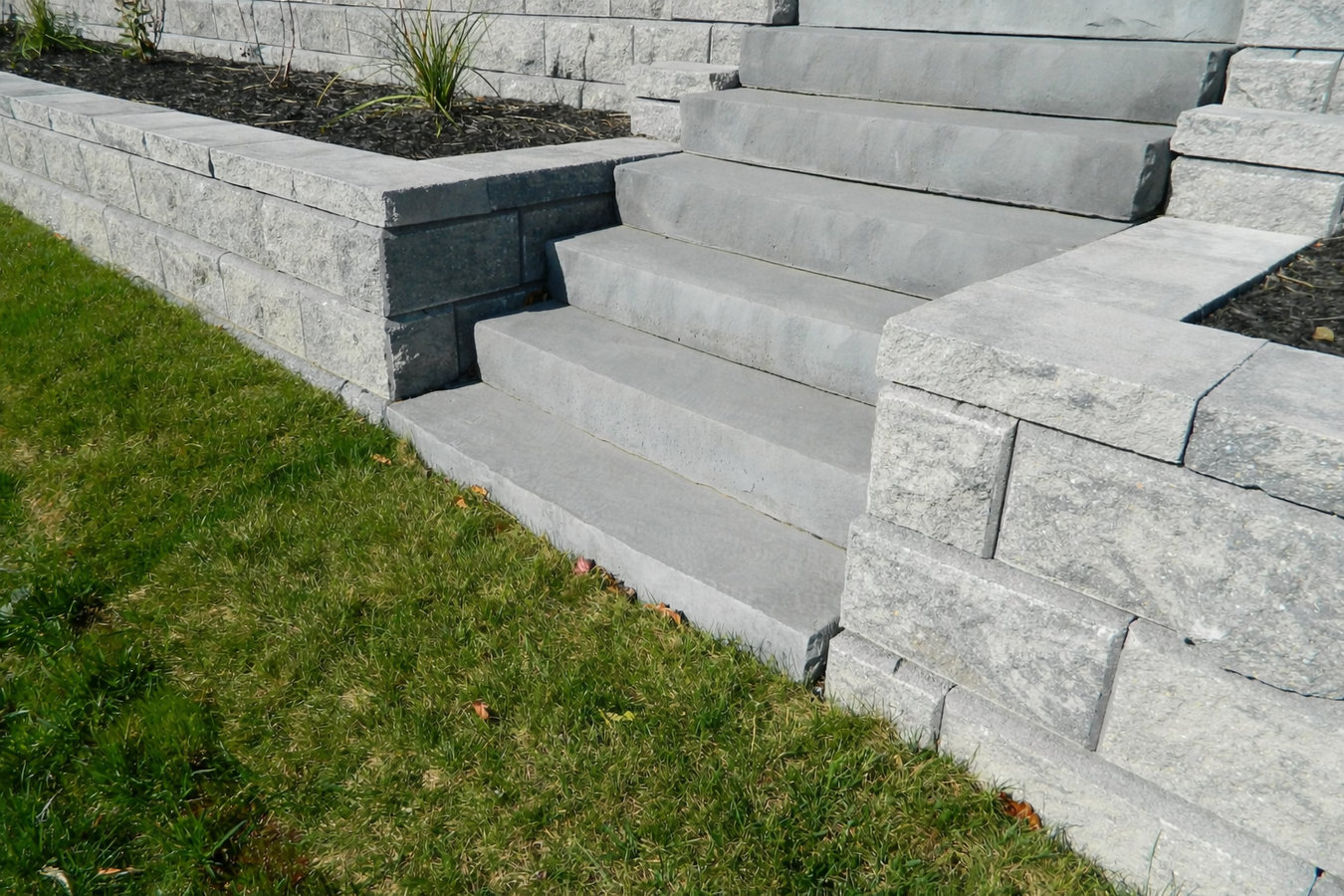
Crumbling edges, tilted sections, or steps that have pulled away from your door threshold are a fall risk every time someone walks up to your house. We build and replace concrete entry steps built for Mission Viejo's sloped lots, clay soils, and HOA communities.
Concrete steps construction in Mission Viejo means forming and pouring a permanent stairway between two levels - most residential front entry projects take one to two days of active work, with 24 to 48 hours before light foot traffic and a full week for the concrete to reach usable strength.
Many Mission Viejo homes were built in the 1970s and 1980s on rolling terrain, and a large share of them have original entry steps that are now 40 or more years old. Steps at that age - especially on sloped lots where seasonal soil movement is more pronounced - often show visible cracking, tilting, or separation from the door threshold.
If your steps sit alongside a grade change that also needs structural support, a concrete retaining wall can be planned in the same scope - combining the two avoids a second mobilization and keeps the finished result looking intentional rather than patched together.
Cracks wider than a hairline - especially ones that go all the way through a step or along the edge - mean the structural integrity of the steps is compromised. In Mission Viejo, this kind of cracking often traces back to the clay-heavy soils shifting beneath the slab over years of wet and dry cycles. Small surface cracks can sometimes be patched, but cracks that go deep or keep returning usually mean the whole set needs to be replaced.
If your steps look like they have dropped on one side, or if there is a visible gap between the steps and your front door threshold, the base underneath has shifted. This is a safety hazard - an uneven step is one of the most common causes of trip-and-fall injuries at home. On Mission Viejo's hillside lots, this kind of settling is more common because sloped sites move more than flat ground.
When the surface of concrete starts to flake off in chunks or the edges of steps feel soft and crumbly, the concrete has deteriorated past the point of patching. This often happens on older steps poured with a lower-quality mix or without proper finishing. Once the surface layer breaks down, water gets in faster and the damage accelerates.
Homes built in the 1970s and 1980s - which covers a large portion of Mission Viejo's housing stock - may have risers that are too tall, treads too narrow, or no handrail where one is now required. You may not notice this until a home inspector flags it during a sale. Replacing the steps brings them up to current standards and removes a real liability.
Every steps project starts with removing whatever is there now and hauling the debris away. We excavate to the right depth for a stable gravel base, compact it properly, and set the wooden forms in the exact shape of your new steps before any steel reinforcement or concrete goes in. We finish the surface with the texture you choose - broom finish for a clean, non-slip look, or exposed aggregate for a more natural appearance common throughout South Orange County - and advise on handrail placement when one is required by the city. We manage the City of Mission Viejo building permit from application through inspection sign-off, and help with the HOA architectural review submission for homeowners in planned communities. If your property's grade also needs a retaining wall running alongside the steps, our slab and foundation work experience means we understand how that grade transition should be handled from the ground up.
We also build new steps where there were none before - from bare ground to a finished, permitted concrete stairway. This is common on Mission Viejo properties that are adding a second outdoor entry, connecting a new patio to a yard, or upgrading a side entry that previously used only stacked pavers or timber.
Demo of the old steps, full base excavation, and a fresh formed pour - the right choice when the existing steps have failed structurally.
Designed for sloped entries common in Mission Viejo, with deeper base prep and forming that accounts for the grade change.
Building a concrete stairway from scratch where only pavers, timber, or bare ground existed before.
Standard textured surface, non-slip, durable, and commonly accepted by Mission Viejo HOA architectural review guidelines.
Small stones revealed in the surface for a natural look with added grip - popular throughout South Orange County.
We handle the city permit application, plan check, and HOA submission so you do not have to navigate either process on your own.
Mission Viejo was developed across rolling terrain, and many of its homes sit on lots where the driveway, the front entry, and the backyard are at noticeably different elevations. That grade complexity means steps here often involve more forming, more concrete volume, and closer attention to base depth than a flat suburban lot in another city would require. The clay-heavy soils common in parts of the Saddleback Valley add to this - they expand in wet winters and contract in dry summers, putting regular stress on anything poured at a grade transition. Homeowners in neighborhoods near Laguna Niguel and throughout the surrounding foothill communities face the same soil conditions, and the same attention to base preparation applies there.
HOA requirements are a consistent factor in this city. Mission Viejo is one of the most HOA-dense communities in Orange County, and most planned neighborhoods require written architectural approval before any exterior structural change - including new or replacement entry steps. Some associations specify acceptable finish types, riser heights, or handrail styles. Skipping the submission can mean fines or a forced redo after the concrete is already poured. Homeowners throughout Rancho Santa Margarita face similar HOA review requirements, and we apply the same upfront process across all the South Orange County communities we serve.
We will ask how many steps you have, where they are located, and whether there are existing steps to remove. We reply to every inquiry within one business day and can usually schedule an on-site visit within a few days.
We visit the property, measure the site, check the slope, and look at what is underneath the existing steps. You receive a written estimate within a day or two that breaks out demolition, base work, forming, the pour, and finishing - no surprises after you sign.
We submit the permit application to the City of Mission Viejo and assist with your HOA submission if your community requires architectural approval. Permit processing typically adds a few business days to a couple of weeks depending on city workload.
We remove the old steps, excavate and compact the base, set forms, pour the concrete, and finish the surface on pour day. Once the concrete has cured, we schedule the city inspection, walk the finished steps with you, and close out the project.
Free on-site estimate. We handle the city permit and HOA submission. Serving Mission Viejo and South Orange County.
(949) 998-2713We serve Mission Viejo and 11 surrounding communities, and a large share of those properties have sloped lots where entry steps require more forming, deeper base excavation, and careful attention to grade drainage. That local volume means we know what the terrain looks like at the permit level, not just from a photo.
We handle the City of Mission Viejo permit application and schedule the inspection as a standard part of every job. That documentation protects your home's value and your homeowner's insurance coverage. You can verify any contractor's current state license through the California Contractors State License Board before signing anything.
The expansive clay soils in parts of Mission Viejo cause concrete to crack and shift when base preparation is rushed. We excavate to the appropriate depth, compact the gravel base correctly, and set control joints where the movement is most likely to occur - the work you cannot see but that determines whether your steps hold up for 30 years or 5.
Mission Viejo has one of the highest HOA participation rates in Orange County. We ask about your HOA requirements at the start of every project and build the submission alongside the city permit so both approvals are in hand before the crew shows up. No surprises, no fines, no do-overs.
Hillside site knowledge, proper base preparation, clean permitting, and HOA handling together are what make a steps replacement project go smoothly - and what make the result hold up through years of South Orange County dry-wet cycles.
California stairway dimensions and handrail requirements are governed by the California Building Standards Commission. For concrete mix and finishing standards, the American Society of Concrete Contractors is a useful professional reference.
If your entry steps connect to a slab that is also showing movement, a foundation assessment before the new steps are poured is worth having.
Learn moreHillside lots in Mission Viejo often need a retaining wall running alongside new entry steps to manage grade change and keep soil from moving toward the slab.
Learn morePermit-ready crews serving Mission Viejo and South Orange County - most projects start within two weeks of approval, so reach out now before the schedule fills.