Concrete cutting
After a foundation lift, openings for new drainage lines or utility access through concrete slabs are often cut as part of the same project scope.
Learn more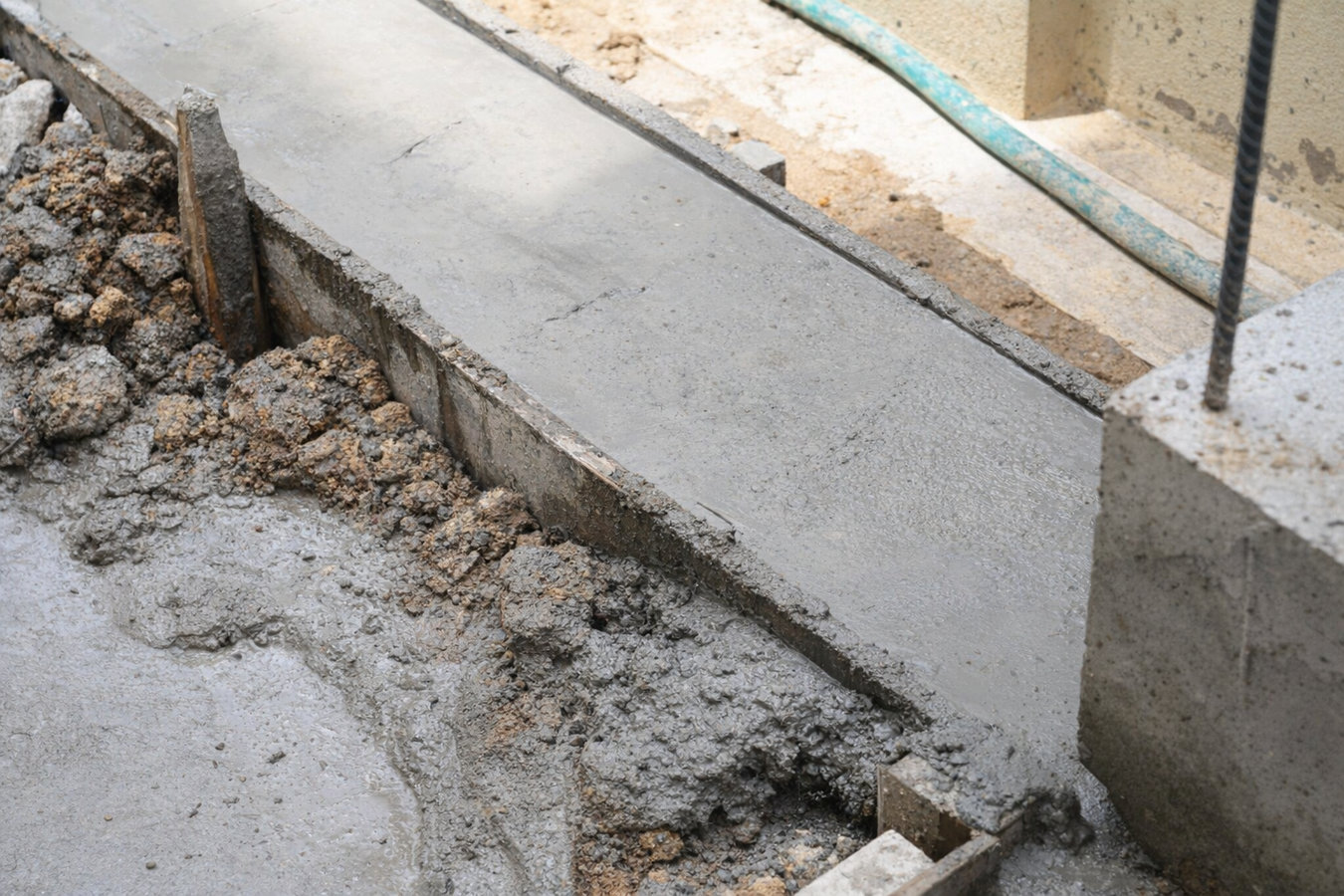
Sticking doors, diagonal cracks, and uneven floors are your home telling you the foundation has moved. We raise and stabilize foundations on Mission Viejo hillside lots, with permits handled and before-and-after documentation included.
Foundation raising in Mission Viejo uses steel piers or pressurized grout driven below unstable soil to lift a sunken foundation back toward its original level position - most residential jobs take one to three days, and all structural work requires a city permit with independent inspection.
Mission Viejo was developed across graded hillsides in the Saddleback Valley, and many homes in older neighborhoods sit on engineered fill placed during mass grading in the 1960s and 1970s. That fill can compress unevenly over decades, causing one corner or side of a foundation to drop while the rest stays put. Once the movement starts, sticking doors, diagonal wall cracks, and sloped floors tend to follow.
If your home is also showing signs of slab damage alongside foundation movement, a slab foundation assessment can help determine whether raising the existing foundation is the right fix or whether a more complete structural repair is needed.
If interior doors that used to swing freely now drag on the floor or refuse to latch, or if windows have become hard to open and close, your home's frame may be shifting because the foundation has moved. This is one of the most common early signs homeowners in Mission Viejo notice, often after the first heavy rains of the season when wet soil has shifted. It does not always mean a major problem, but it is worth having someone take a look.
Hairline cracks in drywall are common in any home, but diagonal cracks that start at the corners of door frames or window frames - especially if they are wider than a pencil line - often point to uneven foundation movement. In Mission Viejo's hillside neighborhoods, where homes sit on graded fill, this kind of cracking can develop gradually over years before it becomes obvious. If you are seeing these cracks in multiple rooms, that pattern matters more than any single crack.
Walk slowly across your main floor and pay attention to whether it feels like you are going slightly uphill or downhill in certain areas. A marble placed on a hard floor that rolls consistently in one direction is a simple way to check. Uneven floors in a Mission Viejo home built on graded hillside soil are a strong signal that the foundation has settled unevenly and deserves a professional evaluation.
If you notice a visible gap forming where an interior wall meets the ceiling, or where baseboards are pulling away from the floor, the structure is moving in ways it should not be. These gaps tend to open gradually and are easy to dismiss as cosmetic issues - but they often reflect the same underlying foundation movement that causes sticking doors and diagonal cracks. Catching this early keeps the repair smaller.
We begin with a thorough on-site inspection using a laser level to measure how much the foundation has moved and map exactly where the low points are. From there, we design the pier layout - steel push piers or helical piers driven to stable, undisturbed soil below the fill layer - so the lift is supported at every point that needs it, not just the most visible ones. In areas of Mission Viejo where the soil has sandy or loose fill characteristics, we drive piers to the depth required to find bedrock or certified bearing soil, which can vary significantly lot to lot across Saddleback Valley neighborhoods. Our concrete cutting capability means we can open a slab for drainage correction in the same mobilization if that work is needed, which is often the case when poor drainage contributed to the original settlement.
We handle the City of Mission Viejo building permit from application through the final city inspection, and we manage HOA notification for homeowners in planned communities - which covers a large share of the city. Before we leave the job, we give you written before-and-after measurements showing exactly how much the foundation moved and confirming where it sits now. That documentation stays with the house and is valuable if you ever decide to sell.
Hydraulically driven steel piers reach stable bearing soil below fill layers - the standard method for hillside lots throughout Mission Viejo.
Screwed into stable soil with torque monitoring - suited for lighter structures or locations with limited access for hydraulic equipment.
Pressurized grout pumped beneath a settled slab to fill voids and raise smaller sections - practical for garage floors and interior slabs.
Addressing the water management problems that caused the settlement, so the pier repair lasts rather than fighting the same forces again.
We pull the required City of Mission Viejo building permit and handle HOA notification - both must happen before work starts.
Before-and-after level measurements provided in writing so you have independent proof of how much the foundation moved.
Mission Viejo was built primarily in the 1960s through the 1980s on graded hillsides across the Saddleback Valley, and the engineered fill placed during that mass grading phase is now 40 to 60 years old. Fill soil that was not compacted to modern standards continues to compress over time - especially during the repeated wet-dry cycles Southern California delivers every year, where winter rains saturate the ground and summer heat dries it out completely. Homeowners throughout Laguna Hills share the same Saddleback Valley geology and face the same fill-soil settlement risks, so local soil knowledge is not a nice-to-have on these projects - it is a requirement for getting the pier depth right.
The seismic context here matters too. Mission Viejo sits within range of the Elsinore Fault and several other active fault systems, which means California's structural standards for foundation work are stricter than in most other states. Any foundation raising done in this area must account for lateral forces from earthquake activity, not just the vertical settlement that caused the original problem. HOA rules add another layer - a large share of Mission Viejo's neighborhoods require advance written notice or architectural approval before structural work begins, and skipping that step can result in fines or forced delays mid-project. Homeowners in Rancho Santa Margarita face nearly identical HOA requirements, and we apply the same upfront approval process across all the communities we serve.
We will ask a few basic questions about your home - its age, what symptoms you have noticed, and whether you have had prior foundation work done. We reply to every inquiry within one business day and can usually schedule an on-site inspection within a few days of your call.
We walk through your home and around the exterior, check cracks, and use a laser level to map exactly where and how much the foundation has moved. This visit takes one to two hours, and we explain what we are seeing as we go - you should feel free to ask questions throughout.
You receive a written estimate that specifies the number of piers, installation depth, and total cost. Once you approve, we apply for the City of Mission Viejo building permit and handle HOA notification. Permit review typically adds a few business days to the start date - no cost to you.
The crew excavates small areas next to the foundation at each pier point, installs the supports, and carefully applies pressure to raise the foundation back toward level. The house may creak as it moves - this is normal. Most residential jobs take one to three days of active work.
Free on-site inspection. Written estimate with no obligation. We handle the permit and HOA paperwork.
(949) 998-2713Every project includes documented level readings taken before the lift and after, so you can see exactly how much the foundation moved. That written record stays with the house and is one of the first things a buyer's inspector will want to see if you ever sell.
We work regularly on Mission Viejo's hillside lots, where grading fill from the 1960s and 1970s requires deeper pier installation than flat suburban lots elsewhere in Orange County. The California Geological Survey documents the expansive soil conditions common throughout this region - knowing local soil depth before the first shovel goes in saves time and avoids costly mid-job surprises.
We handle the City of Mission Viejo building permit application and coordinate the inspector visit on your behalf. The city inspector's sign-off is independent verification that the repair was done to California's structural standards - which matters a great deal for a repair this size.
A significant share of Mission Viejo falls under HOA rules that affect when contractors can work and how the property must look during and after the project. We include HOA notification and documentation as part of every project - not as an add-on - so you are not caught off guard by a violation notice after the work is done.
Every one of these proof points comes from the same basic commitment: do the job correctly, document it thoroughly, and make sure the homeowner understands what happened and why. That is the standard we hold to on every project in Mission Viejo.
After a foundation lift, openings for new drainage lines or utility access through concrete slabs are often cut as part of the same project scope.
Learn moreWhen a foundation has settled beyond repair, a new reinforced slab may be the right long-term answer for the structure.
Learn moreMission Viejo's rainy season puts the most stress on settling foundations - getting an inspection now means catching the problem before next winter makes it worse.